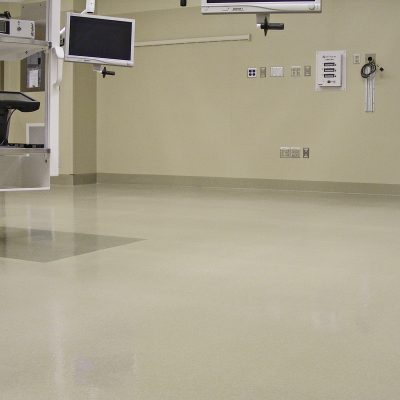
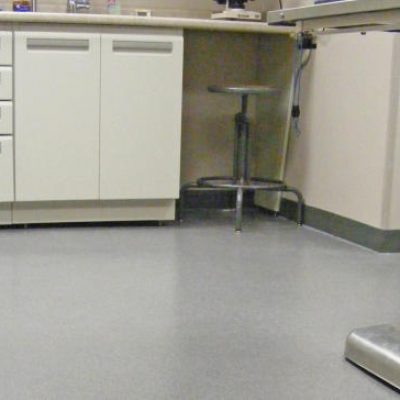
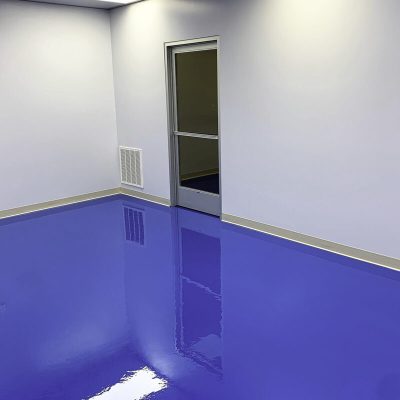
From sterile equipment to hospital flooring, medical facilities need to meet rigorous standards of cleanliness. SwedeBro’s epoxy solutions are seamless, meaning there are no grout lines to catch dirt and bacteria where mold and yeast can grow. Our anti-microbial additive can help maintain a clean, healthy environment and even help reduce odor associated with microbes. Of course, keeping your facility’s floors clean is just as important to prevent the build up of dirt and bacteria. SwedeBro’s hospital flooring is easy-to-clean and can withstand the heavy-duty cleaning products needed for sterile environments.
All of our solutions are chemical, stain, and abrasion resistant. Keeping your personnel and equipment safe is a priority so we can also customize the slip-resistance to meet your requirements. Our epoxy systems also have excellent gloss retention to brighten facilities with our highly light-reflective finish. Not only do our epoxy systems have all those features but they look great too! Whether you need dental clinic, hospice home, donation center, or hospital flooring, SwedeBro will partner with you to find the right solution.
Frequently Asked Questions For School Flooring
What type of floor provides the highest level of cleanliness for medical facilities?
LVT (luxury vinyl tile), vinyl and resinous coatings all work well for common areas and general patient rooms. They are all general purpose, long lasting and can match existing designs in the building. For operating rooms or ones that have medical procedures the best two options are sheet vinyl/rubber flooring and resinous epoxy coatings. For hygiene and sterilization these rooms require the ultimate in ease of cleaning to prevent bacteria growth or infection contamination. These are the two options that are completely seamless and transition up the cove.
What additives are common with hospital and medical facilities?
Flexible epoxies provide relief for hospital staff who are on their feet all day.
Anti-microbial additives are an option to be added to any epoxy.
Non-slip can be incorporated into any epoxy system.
What is the downtime for an epoxy floor in an indoor facility such as a hospital?
For the systems that typically are installed in procedure rooms it is a 5-day process. For other common areas it can range from 1-5 days.
What areas can benefit from using epoxy flooring in a medical setting?
There are other areas that could benefit from resinous coatings in a medical facility as well. Emergency drop off round abouts, parking garages, shipping/receiving, and helipads can benefit from a an epoxy sealed, non-slip floor to protect concrete and personnel.
Medical Flooring Gallery
Let’s get in touch
free estimate
Fill out the form to receive a FREE estimate customized to your project requirements. You will receive a reply within 1-3 business days.